Why I am OK making my kids cry.
Disclaimer: The following post does not apply to children who have medical or sensory issues which impact on feeding, necessarily. Although my stance – that a certain level of discomfort or upset is OK – is the same regardless of a child’s diagnosis or lack of diagnosis, I would not take a blanket approach to managing distress in your child. If you struggle with feeding issues, part of my service is to help you manage those struggles in a way that you are comfortable with.
There are some parents, and professionals, who believe that any and all measures should be taken to avoid a child crying or showing discomfort or unhappiness. I am not one of those parents, or professionals. In my humble opinion, if you set up an environment for your child with little or no expectation, and little or no exposure to things that make them uncomfortable, uneasy, or just unhappy – they will not be adequately prepared for events and situations that they will encounter in real life.
I think it is better for a child to learn to navigate things that they find challenging at home, surrounded by adults who love and care for them, and have their best interest at heart.
Some professionals and many parents feel like if a child says ‘no’ to a certain food (or any activity, really), they should not be pressured to eat the food or do the activity. I don’t disagree that a child should be allowed to have taste preferences – we all have them (mushrooms – blech!), but you can’t dislike a taste you never tasted.
When you are certain that you are being reasonable in what you are asking your child to do – it is OK for them to have their reaction, and for you not to feel guilty about it.
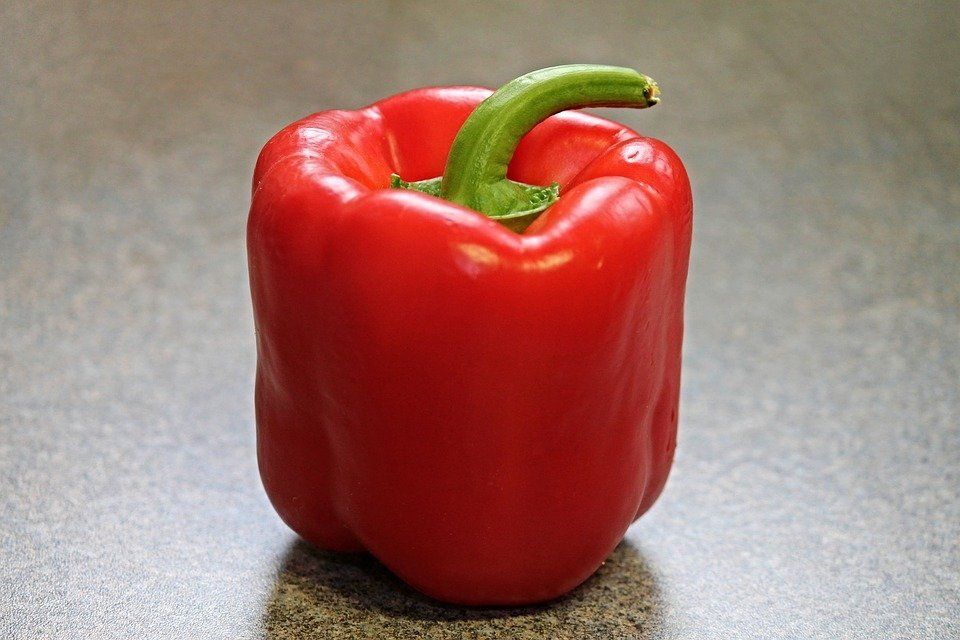
Case in point: Last night, my 5 year old saw that I had made a skillet meal which included chicken, rice, broccoli, and red bell peppers. Also, it was covered in parmesan cheese. That is three ingredients that I know she loves (chicken, broccoli, and cheese). I had already decided that I would put each component of the dinner on her plate separately, and I intended for her to taste one bite of the red bell pepper. As soon as she saw the meal, however, she insisted that she would not eat the pepper.
We have a rule in my home, which I stand by because it is totally reasonable. The rule is, you must try a bite of each food on the table before declaring that you do not like it.
My daughter is prone to drama, and as soon as she realized that she was in fact going to have to eat the pepper, the water works started. Now, had I posted a video of her reaction on social media, I am sure I would have gotten a lot of comments along the lines of ‘how horrible, poor kid, everyone has preferences, etc. etc.’ … but I disagree, and the comments would have been taken out of context.
I KNOW that my daughter works herself up into a tizzy. I know that trying new things is hard for her. And I know that, so far, after eating a bite of a new food, she does not spontaneously combust. Sometimes she even likes it, in spite of herself.
Her reaction to stress is to cry. That’s ok. It’s not funny … but it IS actually a little bit funny, because her reaction is completely out of proportion to the situation.
I feel bad when she cries, of course, but I help her work through it. I am patient, I am kind … what’s that saying about love?
I’m ok with her reaction though because I know that I am not asking her to do something that is unreasonable, and I do not make her eat food that she actually tastes and does not enjoy.
I’d much rather her learn how to cope with her stress reaction at home, though, and not for the first time in the middle of the classroom, or with a group of friends, or while at a place of employment.
So what happened with the pepper? She has learned to cope by eating the offending food first. Although she was anxious about it, she ate it, she calmed down, and we moved on. She is learning how to cope with stress, and I am happy that I am there to help her through it.
So how can you feel good about challenging you child?
Be patient and kind. It IS hard word for kids to manage their feelings, especially when asked to do something that makes them uncomfortable – like trying a new food.
Be reasonable. Know your kid and know yourself. Is what you are asking them to reasonable? One bite of a new food is much more reasonable than a whole portion. Start small.
Be reliable. Create a predictable routine, where your child knows that there will be expectations, and that while there won’t be an ‘out’, you’ll be there to love and support them as they face challenges head on!
__________________________________________
Kristin Quinn is an experienced feeding specialist. Trained at one of the nation’s top Children’s Hospitals, Kristin is well versed in the complexities of feeding, and the impact feeding difficulties can have on an entire family. Kristin is passionate about helping parents find a plan that will work for them. Contact her today for more information! toddlersandtomatoes@gmail.com
The Toddler and Tomatoes website is not a substitute for medical advice. All information is intended for your general information only. Information presented on this site and through our services should not be considered a substitute for medical consult or treatment for specific medical conditions. Information obtained by using our services is not exhaustive and does not cover all diseases, ailments, physical conditions or their treatment. You should never disregard medical advice or delay in seeking it because of something you have read on our site. If you think you have a medical emergency, call your doctor or 911 immediately. Thanks!