
How can you get young kids to take on veggies?
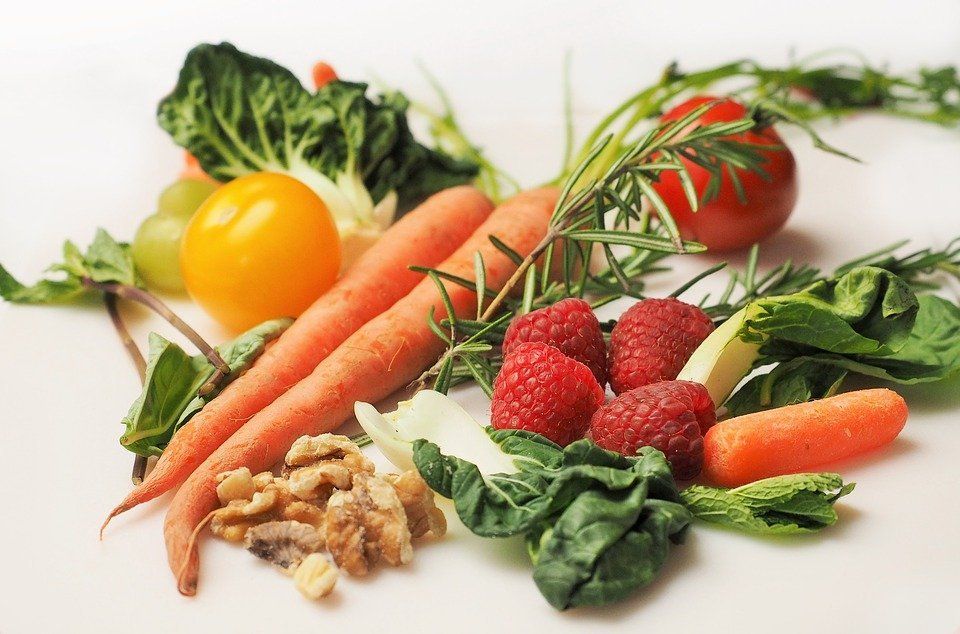
Vegetables get a bad rap. From the time we are very small, the message we receive is that things that are good for you taste bad. Not only is this a bad message to pass on to our children, it is just not accurate. I know several children who prefer broccoli to all other foods, including sweets. Everyone has their preferences, and should be allowed to say "that’s not for me". However, young children need to be exposed to a wide variety of tastes and textures before they really know what foods are pleasing to them and which are not.
Many adults assume that getting their kids to eat vegetables has to be a battle. Before the peas hit the plate, the adult is already anticipating WWIII. Kids sense that. There is an aura around vegetables that kids pick up on. They know you are nervous, and they are going to take advantage of that.
It is true, some vegetables are bright colors, or oddly shaped, or they have skin, or layers, or odd textures. It’s understandable that kids take one look at some veggies and say "That’s not for me!" But as the adults, we have to offer a wide variety of foods to create a well-balanced diet, and help kids learn to try new things.
Here are some suggestions for expanding your child’s diet, despite the protests:
Don’t act like ‘vegetable’ is a bad word. Your child listens to you and picks up on your cues. If you talk and think about vegetables as ‘bad’, ‘yucky’, or something to be eaten specifically to get dessert, your child will do the same.
Don’t be afraid of your children’s reactions. Your child is likely to turn their nose up at anything new or different, things that are a different color or shape than they are used to, things that have a strong smell, or a lot of seasoning on top of it. This isn’t specific to vegetables, and you should expect it. Don’t back down!
Create simple mealtime rules that apply to any food that is offered. Establish simple rules for mealtimes, for everyone at the table. Something like this, "Everyone will come to the table, sit at the table, and try at least one bite of everything." Don’t designate ‘vegetables’ as the food group to fear. Children (and adults too!) should be encouraged and expected to try at least one bite of each item on the table.
Make reasonable expectations, and follow through. Consider whether the vegetables you are presenting are easy for your child to chew and swallow, and how they look compared to other foods your child has eaten. Make sure you start with only a very small taste of a new food (as in the size of your child’s pinky nail). Insist that they try at least the one small bite, not an entire serving. Note: some veggies have skin that is hard for little ones to chew. Save corn, green beans, and other foods with a tough, waxy skin for children who aren’t new to chewing.
Focus on quality before quantity. Although you want your child to eat an age appropriate serving of vegetables, you have to build up to this. Start with one small piece of something new on their plate. Once a single, small bite goes well, increase the size of the bite/serving at each meal it is served.
Praise cooperation. Most importantly, praise your child for trying new things!
This article was previously published on mainlineparent.com
__________________________________________
Kristin Quinn is an experienced feeding specialist. Trained at one of the nation’s top Children’s Hospitals, Kristin is well versed in the complexities of feeding, and the impact feeding difficulties can have on an entire family. Kristin is passionate about helping parents find a plan that will work for them. Contact her today for more information! toddlersandtomatoes@gmail.com
The Toddler and Tomatoes website is not a substitute for medical advice. All information is intended for your general information only. Information presented on this site and through our services should not be considered a substitute for medical consult or treatment for specific medical conditions. Information obtained by using our services is not exhaustive and does not cover all diseases, ailments, physical conditions or their treatment. You should never disregard medical advice or delay in seeking it because of something you have read on our site. If you think you have a medical emergency, call your doctor or 911 immediately. Thanks!